Oura Ring 4 vs Whoop 5.0: I Ran Them Through CompareXY So You Don't Have To
A side-by-side review of the Oura Ring 4 and Whoop 5.0 using CompareXY, with honest guidance on which one fits which kind of person.
As an Amazon Associate I earn from qualifying purchases. This post contains affiliate links.
When I built CompareXY, the whole point was to stop the doom-scroll between Reddit threads, YouTube reviews, and forty browser tabs every time you're trying to choose between two things. So when a friend recently asked me whether she should get an Oura Ring or a Whoop, I did the obvious thing: I opened my own app.
Here's what came back, and more importantly, what I'd actually tell you to do with that information.
What CompareXY surfaced
Side-by-side, these two devices are wildly different products solving overlapping problems.
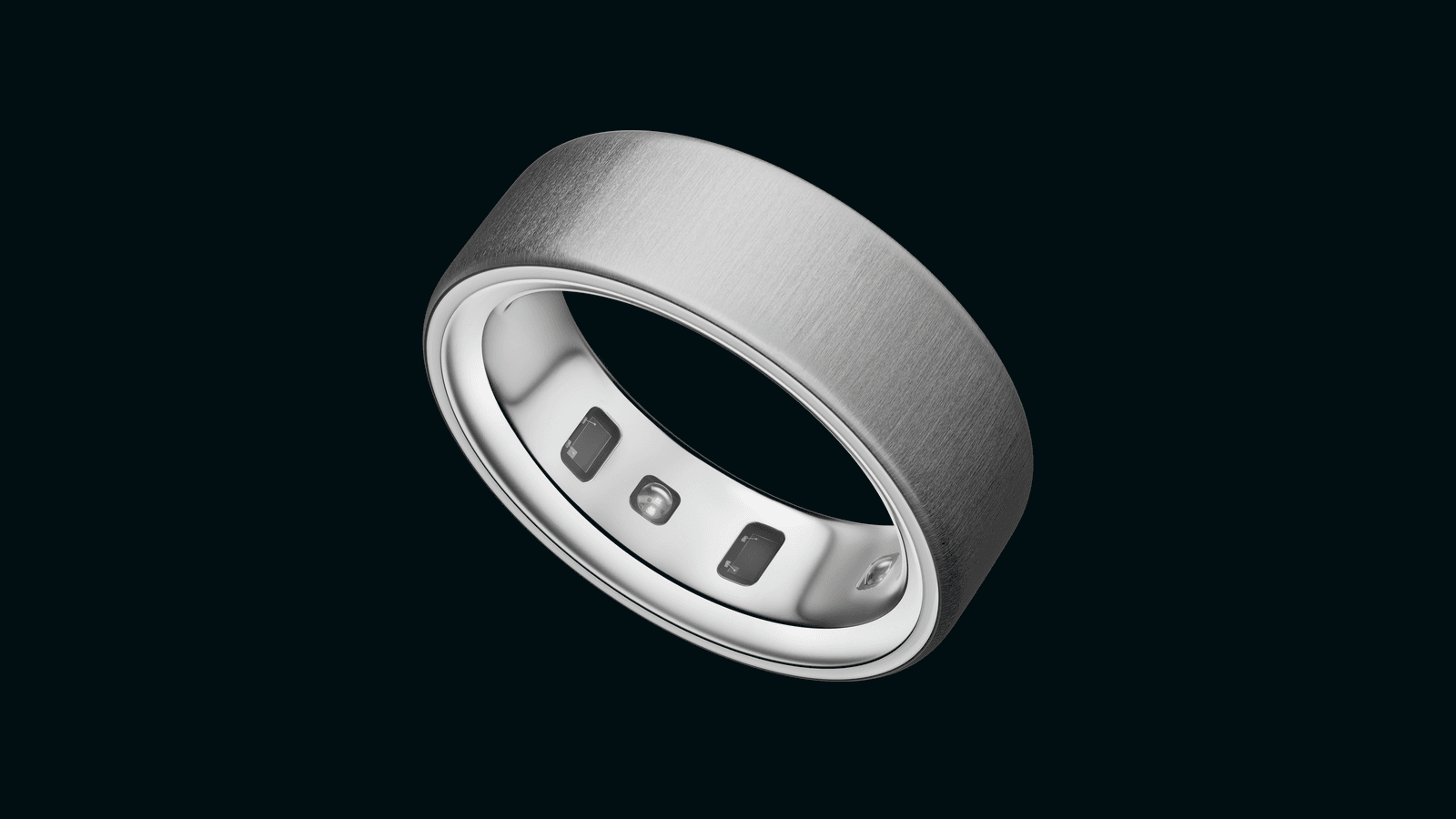
Oura Ring 4 is a piece of jewelry that happens to track your biometrics. It starts at $349, ships in five colors, comes in sizes 4–15, and requires a $5.99/month membership to access the data. You own the ring. You rent the insights.
Whoop 5.0 is the opposite philosophy. There is no hardware to buy. The band comes free with one of three annual memberships — One at $199/yr, Peak at $239/yr, or Life at $359/yr — and if you cancel, the band stops working entirely. You don't own anything. You subscribe to a system.
That's the headline divergence, and it's the one most comparison articles bury halfway down the page.
Which one for which person
This is where CompareXY's structured output gets interesting — it lets you see the trade-offs as decisions rather than features.
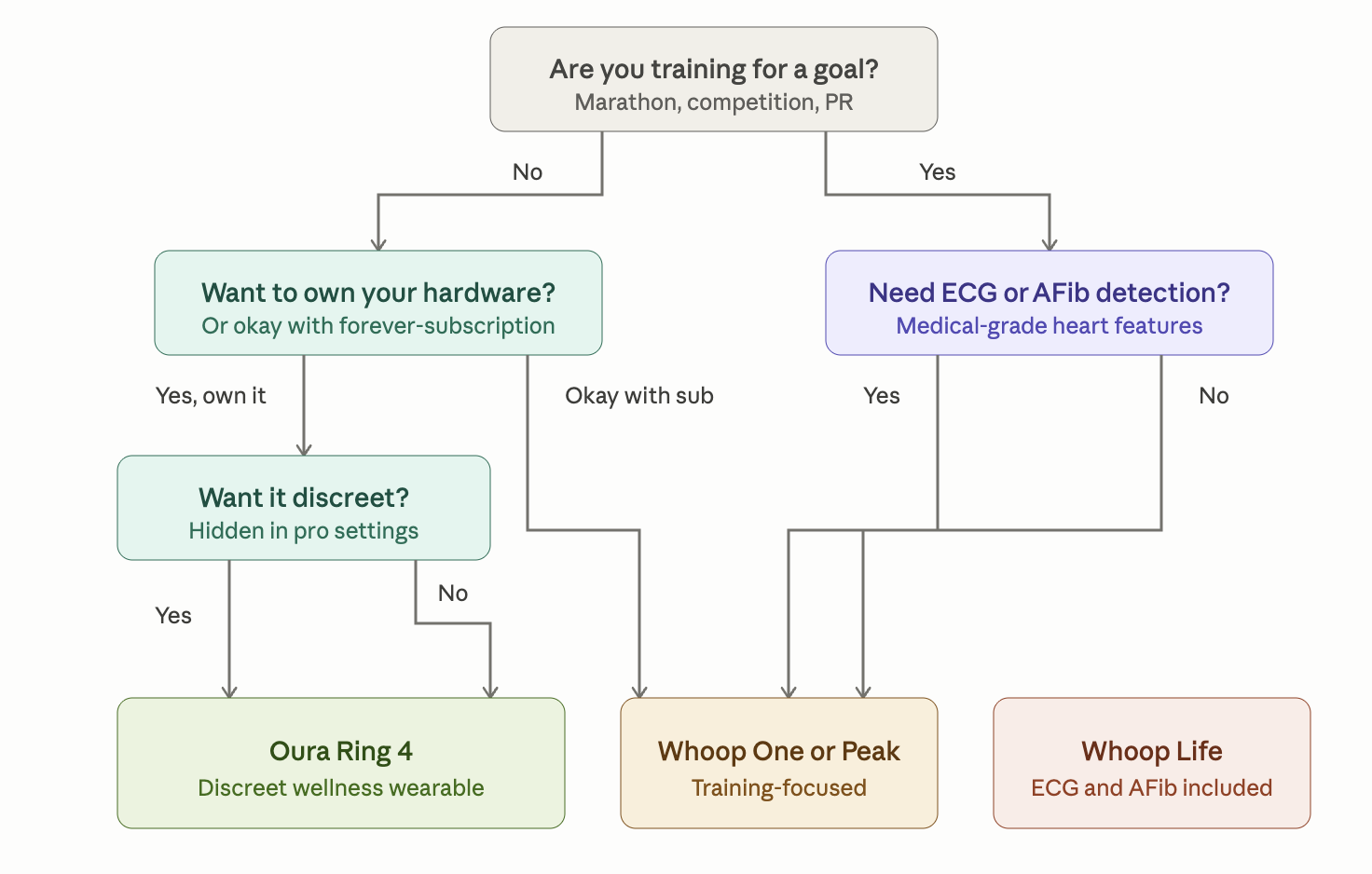
Get the Oura Ring 4 if:
- You want something discreet. A ring disappears in a meeting room or at a dinner party. A Whoop band on your wrist invites questions.
- You care more about sleep, readiness, and long-term wellness trends than workout metrics. Reviewers consistently note that Oura's best features — sleep insights, period tracking, stress monitoring, long-term trends — all come from the app, and the platform is built for people quietly building better habits.
- You want the option to own your hardware indefinitely. If you cancel the membership, the ring still tells time (well, not literally — but the data collection continues, just without the scoring layer).
- The upfront $349 doesn't bother you, but a forever-subscription does.
Get the Whoop 5.0 if:
- You're training for something. Whoop is built around strain, recovery, and exertion targets, and athletes are its core audience for a reason.
- You want medical-grade features. Life ($359/yr) bundles ECG, AFib detection, and blood pressure insights, though those aren't FDA-cleared yet.
- You actually want a screen-free wrist wearable (no notifications, no display, just data syncing to your phone).
- You're comfortable with the all-in subscription model, where the device is essentially disposable and the relationship is ongoing.
The buyer's-guide nuance most posts miss
Two things worth flagging that don't show up in spec sheets:
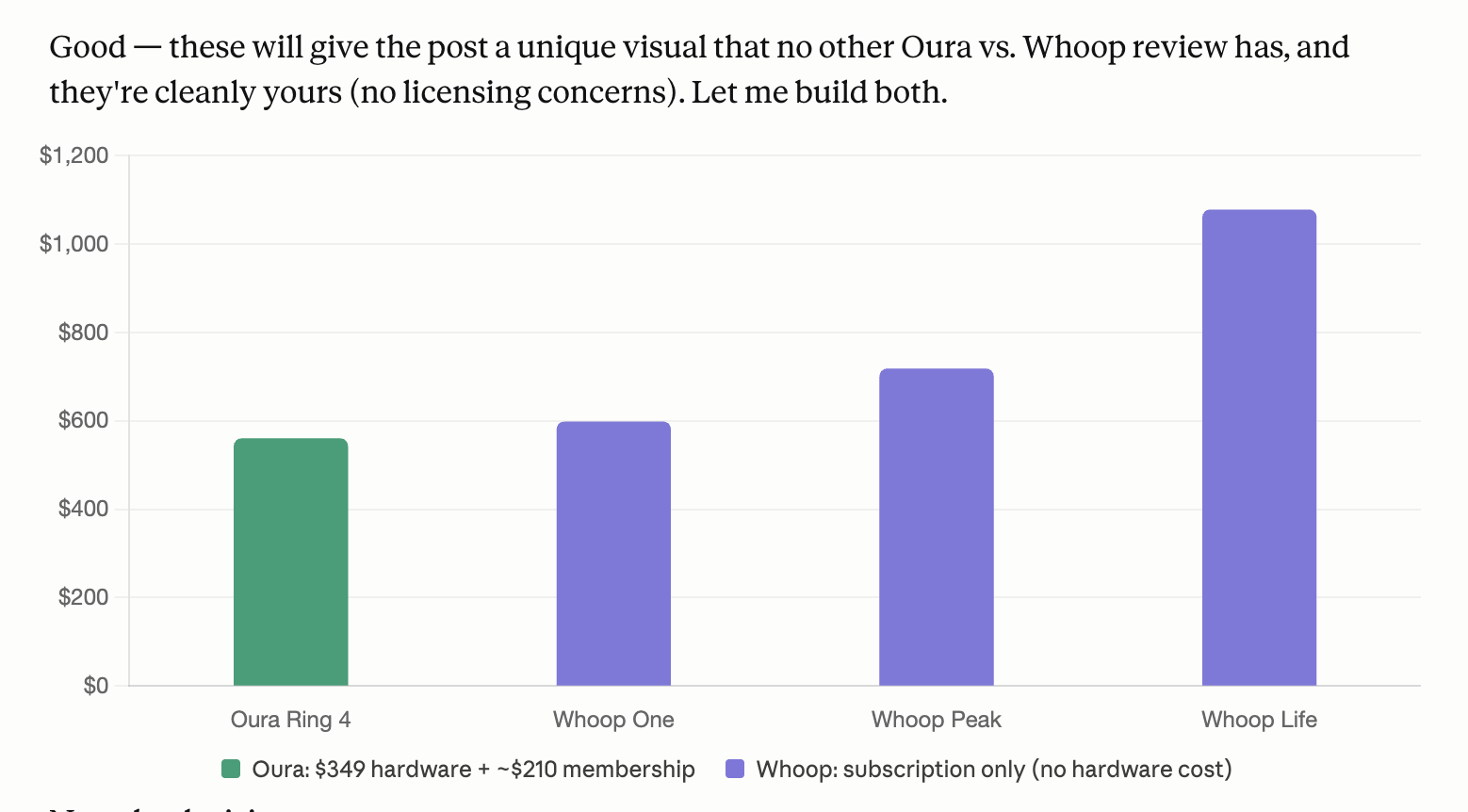
The three-year math is closer than it looks. Oura: $349 hardware + ~$210 in subscriptions ≈ $559 over three years. Whoop Peak: $239 × 3 = $717. Whoop One: $199 × 3 = $597. The "subscription-free wearable" framing for Oura is a little generous — you'll pay for the membership, and most people do.
Cancellation behavior is very different. With Oura, cancel and you keep the ring and your historical data, you just lose the daily scores. With Whoop, cancel and the band stops working — there's no offline mode, historical data stays accessible for 30 days after cancellation and then gets locked, and the hardware must be returned per Whoop's terms. That's a real lock-in if you're someone who likes optionality.
The form factor question is underrated. I've worn both. A ring is genuinely easier to forget about. A wrist band you notice — every time you wash your hands, every time you reach for something in a tight sleeve. For a 24/7 wearable, "do I notice it" matters more than people admit when they're buying.
My honest take
If you're a serious athlete or someone managing a specific health condition where ECG and AFib detection matter, Whoop wins on capability. If you're a busy professional who wants quiet, ambient wellness data and doesn't want a fitness band staring back at you from every Zoom call, Oura is the obvious choice.
For most of the people I know — the ones who asked me about this in the first place — Oura is the right answer. Not because it's a better device in absolute terms, but because the way it fits into a life is gentler. The ring asks less of you. It just sits there, gathers data, and tells you when you're under-recovered.
Which, honestly, is the version of "fitness tech" most of us actually want.
(Shopping for something else? Our Dyson V15 vs Shark Stratos breakdown takes the same approach to vacuums.)
Get new comparisons in your inbox
One email when we publish. No spam, no nonsense — unsubscribe anytime.
Related posts
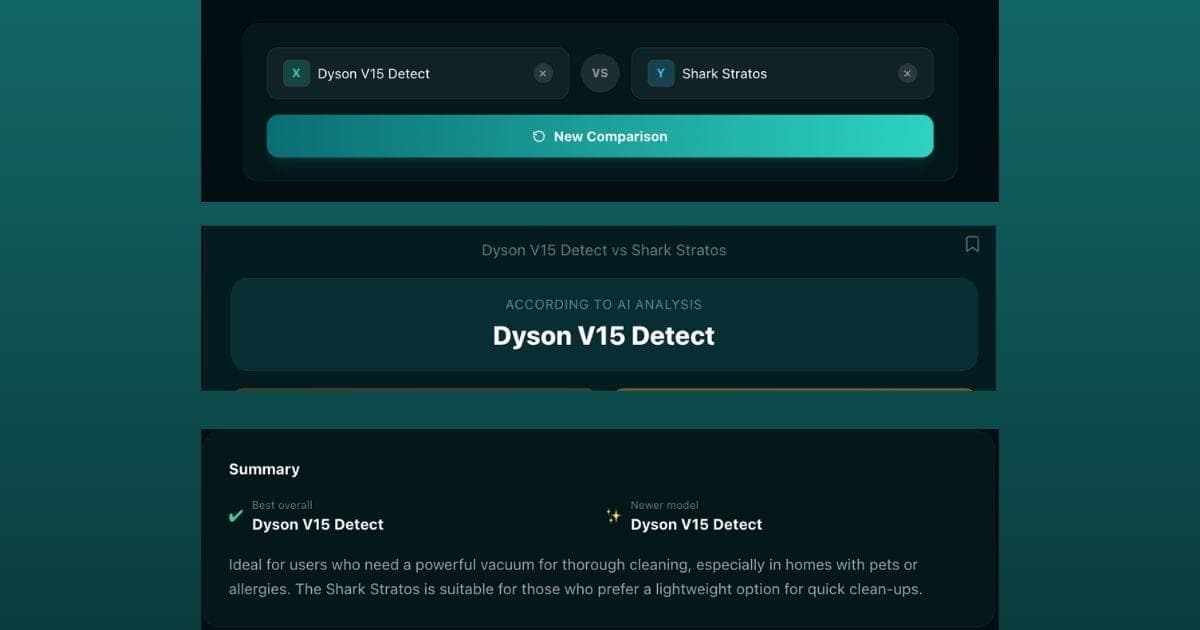
Dyson V15 vs Shark Stratos: Which Vacuum Should You Actually Buy?
A side-by-side comparison of the Dyson V15 Detect and Shark Stratos cordless vacuums — suction power, price, battery life, and which one is actually worth your money.
iPhone 15 vs Pixel 8: Which Should You Buy?
A side-by-side comparison of the iPhone 15 and Google Pixel 8 across camera, battery, software, performance, and price — plus a clear recommendation based on what you care about most.